
Menu
News and Blog
Seaweed Is One of Nature’s Most Regenerative Resources – And Acadian’s Stewardship Is Sustainably Unlocking Its Potential
Across every industry that depends on natural resources, one principle is becoming increasingly clear: the future belongs to those who manage their resources responsibly. In the seaweed sector, this truth is amplified by the extraordinary nature of the resource itself. Seaweed is not just renewable — it is one of the most regenerative, resilient, and ecologically beneficial materials on Earth.
At Acadian Seaplants, we have spent more than four decades studying, cultivating, and stewarding this remarkable marine plant. And we’ve learned that its potential — for agriculture, climate resilience, coastal economies, and global food production — is enormous. But realizing that potential requires one thing above all: science‑driven, regenerative resource management.
Seaweed: Nature’s Marine Superpower
Seaweed is a biological marvel. It grows rapidly, regenerates naturally, and thrives in dynamic, high‑stress environments. It absorbs carbon, stabilizes shorelines, supports biodiversity, and produces biochemical compounds that help terrestrial crops withstand heat, drought, salinity, and environmental stress.
It is, in every sense, a regenerative engine — a marine superpower.
- It regrows quickly after harvesting.
- It produces new biomass annually at exceptional rates.
- It strengthens marine ecosystems rather than depleting them.
- It provides habitat for fish, invertebrates, and coastal wildlife.
- It requires no fertilizers, no freshwater, and no arable land.
- It delivers compounds that improve crop resilience and yield stability.
Few natural resources offer this combination of ecological benefit and commercial value. That is precisely why responsible management matters so deeply — and why Acadian has invested so heavily in it.
Acadian’s Stewardship: A Model for Regenerative Resource Management
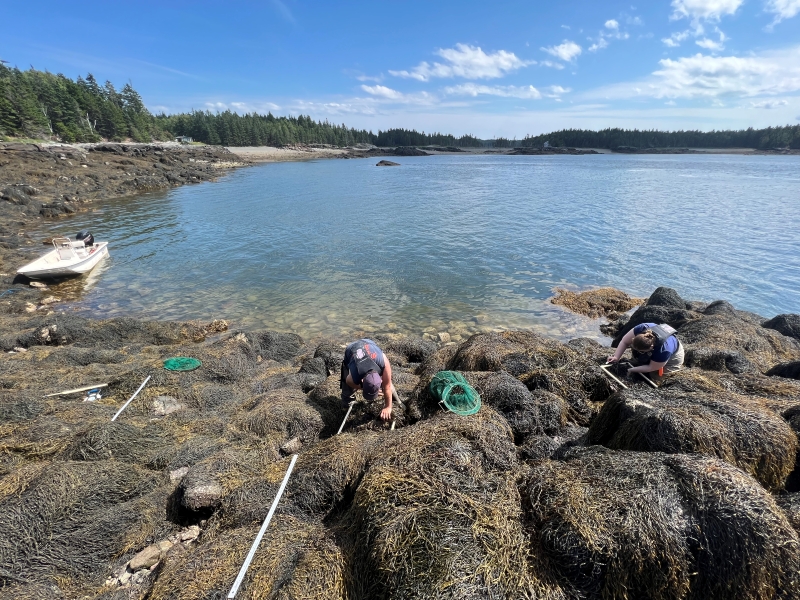
Acadian’s commitment to stewardship is not a slogan — it is a necessity for sustainable and regenerative resource management. Our Resource Science team has built one of the world’s most advanced marine‑plant management programs, grounded in decades of ecological monitoring, biomass modeling, and field‑based science.
And critically, Acadian stands alone in this sector with multiple PhDs on staff dedicated exclusively to resource science and marine-plant ecology. This unparalleled scientific expertise guarantees that every harvest decision is driven by rigorous data, comprehensive long-term monitoring, and forward-looking ecological insight.
Our investments include:
- Long‑term ecological monitoring across entire coastlines
- Biomass assessments to determine sustainable harvest levels
- Strict harvest quotas (typically 17–25%) based on regrowth science
- Defined cutting heights to protect holdfasts and ensure rapid regeneration
- Sector‑based harvest planning to prevent localized overharvest
- Transparent reporting to government regulators
- Partnerships with small local harvesters who know the resource best
This is regenerative resource management in practice — a system designed not only to protect the resource, but to maximize its long‑term ecological and economic value.
A Global Industry Without a Global Standard
Despite seaweed’s importance, global resource management systems vary widely:
- Norway & Iceland: Minimal government regulation because much of the seaweed is privately owned. Sustainability depends on operators choosing science‑based practices.
- Ireland: Rockweed harvesting has operated for decades with almost no formal management framework. Efforts to introduce structure have raised concerns — but they also present an opportunity to modernize and protect the resource.
- Canada: The global benchmark. Harvesters operate under leases, biomass assessments, strict quotas, defined cutting heights, and detailed reporting. This is resource management built on science, monitoring, and long‑term ecological stewardship.
These differences aren’t just administrative. They determine whether the resource will remain healthy, accessible, and economically viable for generations.
Local Harvesters Are Essential Partners in Stewardship
In regions considering new management frameworks, concerns often arise about the future of local harvesters. But responsible resource management doesn’t sideline them — it strengthens their role.
Acadian relies heavily on small, skilled, community‑based harvesters, not large machinery. Their knowledge of the coastline, tides, and regrowth cycles is indispensable. Regulation does not displace them; it protects the resource they depend on.
Yes, structured management may shift how prices are negotiated. But it also delivers something far more valuable: a stable, predictable, healthy resource base. That stability is the foundation of long‑term economic resilience for harvesters and industry alike.
Why This Matters for Global Food Production
As climate volatility increases, global agriculture is under pressure to produce more food with fewer inputs and greater resilience. Seaweed‑derived solutions — powered by Acadian’s regenerative resource management — help crops:
- withstand heat and drought
- improve water‑use efficiency
- strengthen stress‑response pathways
- enhance root development
- stabilize yield under extreme conditions
In a world facing rising temperatures, unpredictable seasons, and growing food demand, seaweed’s regenerative power is not just valuable — it is essential.
“From its inception, Acadian Seaplants has taken responsibility for the ecology of the seaweed where it can. This has not and will not change. The only thing that changes is the willingness of others to do the same,” says James Maude, Chief Operating Officer, Acadian Seaplants.
Acadian’s stewardship ensures that this marine superpower remains available, abundant, and responsibly managed for decades to come.